
MI VIDA MADRILEÑA
Summer 2012
A Saint for All the Single Ladies

oh oh oh oh oh oh oh oh oh oh put your hands UP!
We all know the Beyonce song, and all of us single ladies love that we can jam out to something our non-single friends can’t. In Madrid, they have a slightly different take on the power anthem. Instead of putting their hands up, the single ladies put them down… into a bowl full of pins!
June 13th is the Verbena (Festival) of San Antonio de Padua, the patron saint of single women. (Now I don’t know if thats his official title, but I guarantee that is what he is best known for.) It is held in the town of Moncloa and centers around the Ermita of San Antonio de la Florida, a small but important church that not only has a beautiful fresco ceiling painted by Goya, but is also where he is buried sans head*. Apparently in ye-olden-days, modistillas (dressmakers) of marriageable age would visit the church and throw 13 alfileres (pins) into the baptismal font to pray for a husband. They would then stick their hand in and the number of pins that stuck signified the number of suitors they would have that year.
Today you can no longer toss pins in the font since the church is a national monument, and a second church has been built next door to preserve the art. This doesn’t stop people from participating in the age old tradition though. Some women buy cards and rub them on the feet of a statue of the saint for blessings. Others (like myself) visit the lady outside with a basin chained to a tree filled with pins. I gave it a stir and stuck my hand in. First time, no luck… Second time, one pin stuck meaning I have been blessed with one boyfriend for the year. It was in a little deep (I can still see the mark) so it must mean it will be a serious one! Haha. Some girls got even more lucky - if that is what you want to call it - with up to 13 pins sticking to them.
If you know me, you know I don’t believe in Saints or superstitions, but it was still so fun.
*There are two hypothesis to why Goya may not have been buried with his head. The first is that he was very smart and wanted his brain to be studied. The second is that he died disliking the monarchy so asked that his body be put in Spain but his head in the more modern France.
Masterpieces
I had the absolute pleasure to take a tour of the Prado museum last week, considered one of the most important art museums in the world. It was a tour lead in Spanish by my school, so it was doubly educational. We saw the works of El Greco, Goya, and Velasquez.
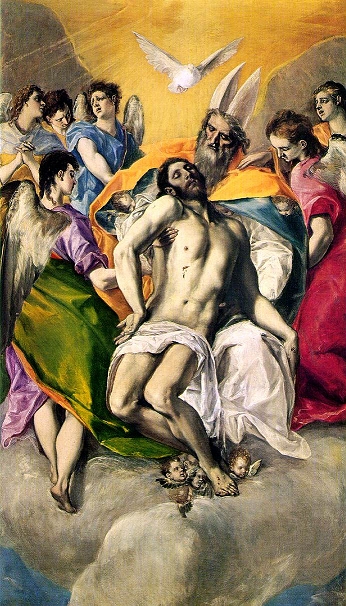
- El Greco I liked mostly for his use of color. He painted either religious paintings or portraits of nobels in Toledo. All the religious paintings had a formula - long bodies, two halves signifying the earth and heaven, and symbolic colors. In the following picture, “The Holy Trinity” you can see these characteristics. Some say he painted long bodies because he had vision problems, others say he did so to symbolize the spirit stretching to the heaven. I choose to believe the second hypothesis, especially because his portraits didn’t seem distorted. God is dressed in royal colors of gold and blue. Mary was always painted in blue and red.
- Goya I liked least. I think most of his works are in France since he died there. The Prado houses the 2nd and 3rd of May, paintings depicting the uprising of the Madrilenos against the French. What most interested me, if not for their content but for the thoughts behind them, is the full collection of Goya’s Black Paintings. Found in his Spanish home by a grandson, they give a glimpse into his mind. Whether he was crazy or depressed by the state of Spain (they were painted soon before he left) is up for debate. They seem extremely personal to me, especially since he chose to surround himself with them. One of the most famous is “Saturn Devouring His Children.” It may be a commentary from Goya saying that the monarchy is bad for Spain, especially since the body seems to be a woman and España is a feminine country (ends in “a”.) Also, the body’s right arm and head is gone, maybe symbolic for the oppression of the people.

- Velasquez was by far my favorite. The man was a genius, with a library for his own using in the palace. I feel like I have less to say about his works because I was content to sit and look, rather than listen to the tour. Some of the paintings we saw of his where those that mixed greek/roman mythology with every day life. He liked the stories, but lived in a time when the church did not. Therefore, he disguised mythological stories in what where depictions of incredibly relevant scenes from Spain at the time. His use of symbols and hints is overwhelming. Then we saw “Las Meninas.” Wow. One of the most analyzed works in western art, it is breathtaking. Number one its huge, number two it is very complex. No one can agree who Velasquez - in the painting itself - was painting. Some say it was the Princess Margarita, in the center, others say it was the King and Queen, who can be seen in the reflection of the mirror in the back. Something else interesting we saw are known as arrepentimientos. These are changes in the painting that over time have become visible. For example, in one painting Velasquez moved someones foot to a different spot after he was nearly done.

If you’ve read this far its obvious to me you like art. You MUST go the the Prado. I can’t wait to see the rest of it, especially the Rembrandt!!
Spanish Street Style
Looking at what people wear in Spain has been really enjoyable. I so wish that I was either sly or bold enough to document some of the outfits I’ve seen. Women are incredibly fashionable - as I was told before I got here. Dresses are the regular, pants are worn often. Two giant fashion brands come out of Spain, Mango and ZARA, so I am not surprised.
Here’s what I’ve noticed:
Wedges rule during the summer. Women generally wear heels all the time.

Spainards are not afraid of color. Colored pants are very popular, so is wearing nearly the same color on top and bottom. Mixing lots of bright colors happens too. It sounds crazy, but it looks great.

Men wear extremely well made and fitting suits.

Man-pris (capris for men) are very normal. My favorites - haha- are the ones that tighten at the knees. Sooo euro. Here we see super successful Spanish tennis player Rafael Nadal rocking the style - when you win 7 French Open titles I think you are allowed.

I have much to learn…
“Quien tiene boca se equivoca.
Whoever has a mouth makes mistakes.”
New Words Weekly: Part Dos
Seeing as I have officially been in Spanish classes for a week, if I were to record all of the new words I learned it would be horribly long and probably boring. So instead I’m going to focus on words I like and think I will use, especially phrases. My language and conversation teacher’s name is Ana and she has done a great job of telling us “in Spain, we use this phrase or word a lot.” I marked those with an asterisk* I’m really grateful because using them should make me seem less foreign.
la materia (n) = subject in school
el asunto (n) = subject in an email
la carrera (n) = major
la especialización (n) = minor… well sort of since they don’t really exist in Spain.
el puente (n) = bridge, but used in a sense to say if there is a weekend, and then a holiday on a Tuesday, Spainards may take a puente, or day off on Monday, to connect the two. They really know how to relax here.
mustiar (v) = to mumble
susurrar (v) = to whisper
cotillear (v) = to gossip
procurar (v) = to try to ie, procuro hacerlo, I try to do it.
*tener ganas de que = to want to do a lot, to be excite for; used all the time as opposed to estoy emocionada.
*como queiras, donde queiras = what ever you want, where ever you want
majo/a (adj) = nice
es que = it is that, used to explain
rendirse (v) = to surrender, give up; used as me rindo, I give up, when you just can’t do something anymore.
soler (v) = to tend to
hablar a la pared = to talk to the wall
hablar conmigo mismo/a = to talk to myself
aprobar (v) = to pass a class
probar (v) = to taste
*hacer falta (v) = to need - always used instead of necesitar. ex: me hace falta pan, I need bread.
quedarse en blanco = when you can’t think of anything to say when you are nervous, to draw a blank.
huir (v) = to flee de alguien or a un lugar
disculparse (v) = to ask for pardon con alguien or por algo.
prestar (v) = to lend
meterse en la vida de alguien = to be in someones buisness
dar recuerdos = to greet someone you haven’t seen in a while
echar una mano = to help
enfaldado/a (adj) = mad
estar en boca de alguien = literally to be in someones mouth, but it really means that someone talks about you a lot and is normally negative
hablar por los codos = literally to talk with elbows, but is synonymous to talking someones ear off; used to refer to someone who talks without stopping
los demás = others
la talla (n) = size of clothing
el numero (n) = shoe size
el tamaño (n) = size
que aproveche = bon apetite
*acordarse = to remember, used in place of recordar
estar hecho un lío = to be very confused
atrever (v) = to dare
*a lo mejor = maybe
haha, it’s still pretty long
More Interesting Than History
I went on a walking tour of Madrid on Tuesday, lead by my very expressive - and fashionable - cultura teacher. I was glad to finally have a tour of some sort. I’m notorious for taking pictures of things that look important although I have no idea what they are. I’d seen much of what we viewed already, so the tour for me could have been titled “an explanation of your camera’s contents.”
Of course, she recounted the dates major events happened, which king is on which horse (there are so many man-mounted-on-horse statues), and explained the significance of major landmarks. My favorite points in her tour though were not the actual historical facts, but the stories/rumors/legends behind some of Madrid’s oldest places. I’m going to save you the tedious details, and instead tell you the good stuff.
Did you know…?
- Like many other cities, Madrid has a Plaza Mayor, a big square surrounded by a building. At one point it functioned as a market, bullfighting rink and speed dating location (?). Legend says that men could only walk in one direction around the outside, and women in the other. When a guy saw a girl he liked, he could just pick her out of the line!
- At one time, Madrid was a walled city, therefore many places have names like the famous Puerta del Sol (Door of the Sun) named for some characteristic of the gate that once stood there. There is a certain square in madrid, outside the Plaza Mayor called La Puerta Cerrada. It got its name because it was often closed at night due to crime, but is more famous for why its no longer there. There was once a Spainish king, married to a queen, who also had many amantes (lovers). He made a habit of meeting one of them at night at the Puerta Cerrada. So, the queen had it destroyed to keep the king from seeing her. I hope for the queen’s sake the saying “if one door closes another one opens” didn’t come true.
- There is a saying: ”Quien no pasa por la calle de la Pasa, no se casa” (He who doesn’t pass by/walk on the street of the Raisin, does not get married.) This adorable, superstitious play on words actually has its roots in real history. 1. It was once a street lined with church buildings. Poor people that lived in the area were told that if they came to church they would be given some food, like raisins, and water, resulting in its name. 2. Because it was lined with church buildings, people would literally have to walk down the street in order to get married so they could have their papers signed. If they didn’t do that, they weren’t legally married. This fact has turned in to a great little piece of superstition. Lucky me, I’ve officially passed through raisin street. Sadly, there was no husband waiting at the end - or raisin. =D
ps. Still struggling with uploading pictures! I’m going to try the wifi at school on Monday.
"You are already becoming a Madrileña, because Madrileños complain a lot" ~ Señora
I know the title sounds like a horrible thing but you’ll understand why its not after you read this story of personal triumph. =)
Tonight Lylah, Caitlin and I went out for cena. After much decision making and menu reading (I blame only myself) we picked a restaurant called Universo. We ordered off the menu given to us and displayed in the window - the menu of the day. It has a few parts, a first plate, second plate, and then you also get a drink, dessert and bread (Yes, like those deals at Fridays only better.) We all picked off a menu that cost 8.80 euros.
We ate and laughed - the waiter was nice, the food was filling and interesting. We even got free shots of non-alchohlic apple sweet liquid (you read that right, it was weird) because we are guapas “attractive.”
Then came the check. It had random coffees and other things on it and the waiter explained it was because Lylah had only had part of the meal (true) and it was easier to put it in that way (ok, fine). Caitlin and I had been charged for the more expensive menu, 10.80 euros. I told him we didn’t eat that and he said he’d go talk to the owner.
Then he came back and said “I’m sorry this time it is more expensive.” He proceeded to explain that because we had eaten at night we were eating the “menu of the night” as opposed to the “menu of the day.” But there was nothing anywhere he could show us about the “menu of the night” besides making something up about the days of the week. He walked away and by then we were certain we were being ripped off because we are extranjeras “foreigners.” We considered leaving and paying for only what we had eaten, probably looking visibly agitated, when he returned yet again. I barely had the words “I can’t believe this” out of my mouth before he placed a third, correct check on the table and told us the owner had given us the cheeper price because we were gaupas. Then he said in Spain there is both a day and night menu. I said all the other restaurants only had a day menu, and he said yes maybe in other places. And he said all of this with a smile. We left, full of what was good food, but with a sour taste for the establishment.
When we got home, I asked Señora if there is a night menu and she said no, you can eat the menu of the day at any time. We then proceeded to tell the story of the check. That is when she said “You are already becoming a Madrileña, because Madrileños complain a lot.”
See, a total compliment!
It was quite a triumph - for being able to communicate clearly in Spanish and for three american girls to fight for their right to not be taken advantage of.
New Words Weekly: Part Uno
If learning Spanish is not your thing, feel free to skip this post. It is the reason I am here in Madrid though and I decided there is no better way than to write down words I’m not familiar with when I hear them and then be sure to look them up when I get home. Yay learning!
la águila (n): eagle, used in reference to someone who is sharp/always watching
el aseo (n): bathroom (this one was surprising)
el bombon (n): a piece of chocolate, but also used to refer to a person who is really attractive
el búho (n): owl (the early morning buses that run in Madrid since the party doesn’t end till 6 am!)
el cumplido (n): compliment
ligero/a (adj): light
la madrugada (n): early morning, dawn
la pasa (n): raisin
salado/a (adj): salty
el taller (n): workshop (in reference to workshops to learn how to dance flamenco and how to cook tapas I will take through my school!!!)
el topo (n): a mole, used like it is in English to mean a spy
not new, but worth noting:
- En España, se dice el ordenador en vez de la computadora; se dice el móvil en vez del celular.
- También se usa encantado/a cuando te conoces a alguien en vez de mucho gusto.


The photos of the day! I couldn’t help but take a picture of these two in el Parque del Buen Retiro.
"Here in Spain, we do not yet understand vegetarians." ~ an actual quote
More details on on how/what/when Spaniards eat. Food is important to me, ok?
- Around 7 in the morning, they have a small desayuno ”breakfast” of coffee and a biscuit
- Tentempié “snack” happens mid day because the next meal is so late and is ligero "light"
- What we learn as almuerzo ”lunch” in school is called simply comida ”food” in Spain and is the big meal between 2-4 pm.
- Kids will often have merienda, another snack, when they get home from school, of something dulce “sweet” or salado ”salty.”
- Cena ”dinner” is the late meal from 9-10 pm with the yummy and varied tapas. The word tapa actually comes from when small bites of food on bread were placed over wine to keep the bugs out.
Last night our the whole UF in Madrid group went out to a dinner organized through the program, and were served what seemed like a lot of traditional spanish dishes. The foodie in me was rejoicing.
We had tortilla española (much like an egg and potato fritata,)

queso manchego with slices of jamón ibérico,


croquetas filled with chorizo and cheese,

revuelto de gambas con hongos (a cooked mixture of little shrimp and mushrooms,) mushroom caps, cod fish in butter sauce (I haven’t been able to figure out the name,) finished off with tarta de santiago (an almond cake.)

It was all wonderful, and I can’t wait to try all the other Spanish dishes out there. Paella and gazpacho por ejemplo.
Just an interesting observation: I’ve noticed as opposed to cutting off a piece of bread to take bites off of, Spaniards cut off a piece of bread and then pick smaller pieces off with their hands. Butter doesn’t seem to be very common.
Hungry yet? I know I am after writing/researching this, and I still have three and half hours till dinner. =)
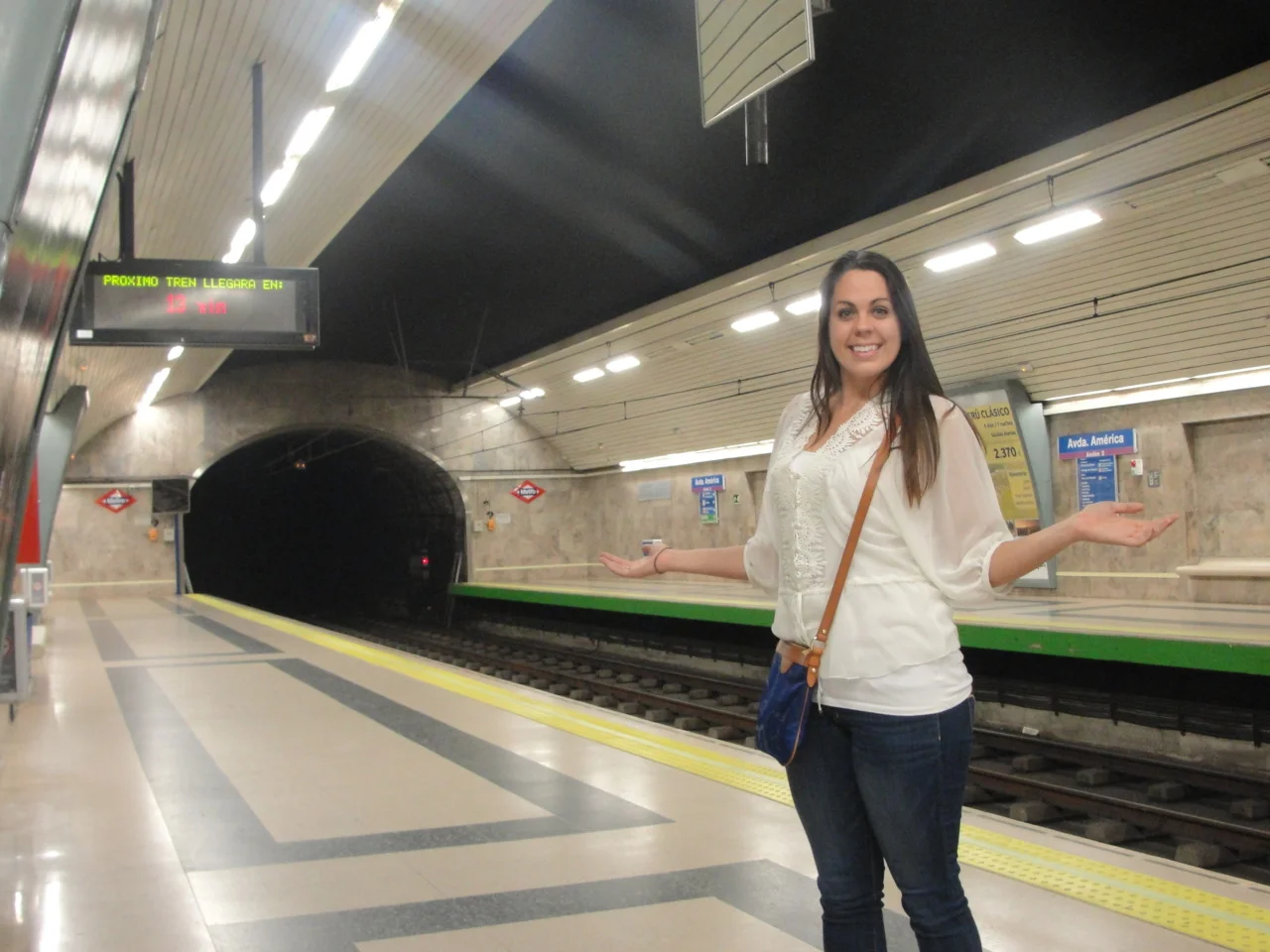
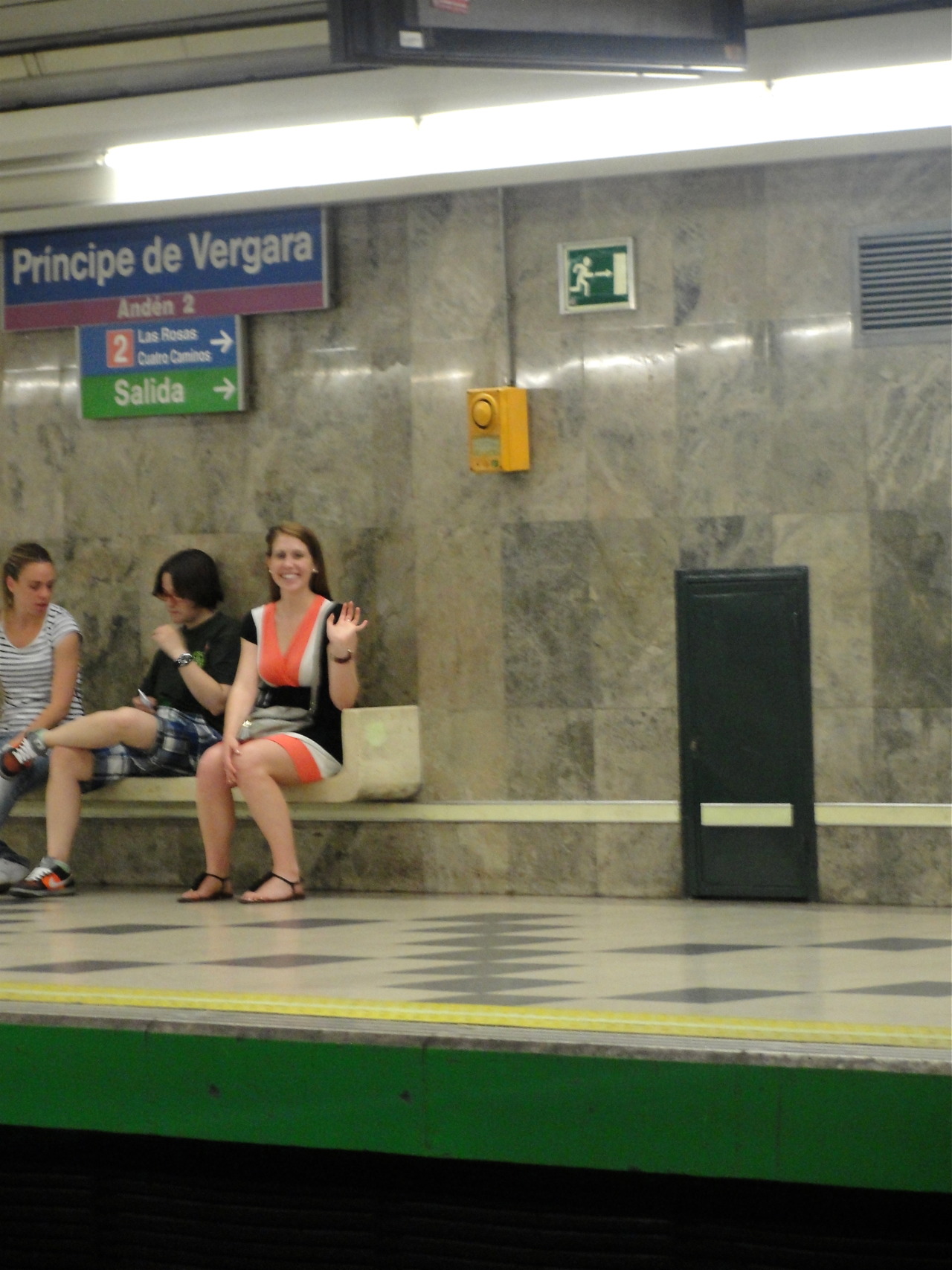
Why yes, that is a washing machine in the kitchen.
I think learning about the subtle differences in the way life is led in foreign places is one of the joys of the traveling. Here are just a few I noticed today…
- There is actually a washing machine in the kitchen (though currently broken… I expect a post about “how I lugged my laundry to the laundromat” in the near future.)
- Special K not only includes strawberries but other ‘red fruits’ cherries and raspberries.
- Spaniards definitely weigh less than Americans. I think I’ve seen maybe 10 overweight people. It maybe be because this is a walking city.
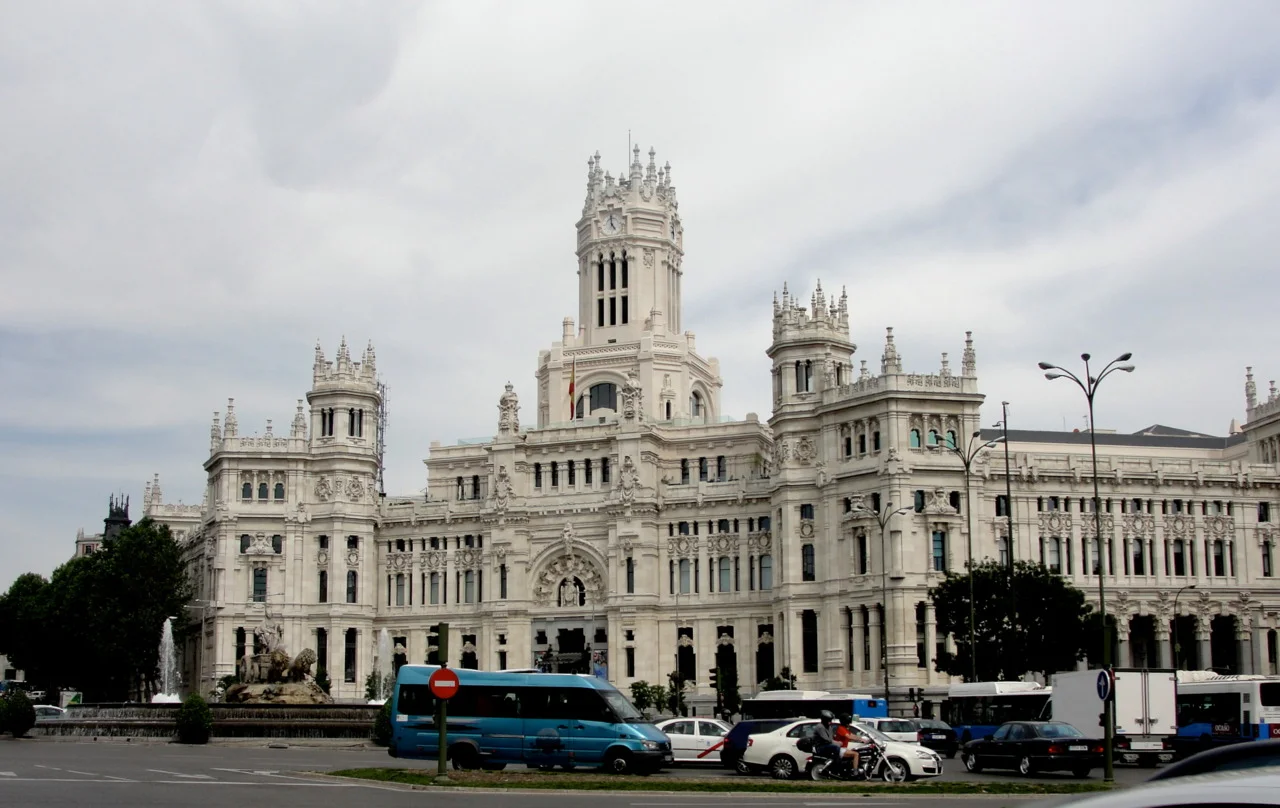
- On that note, walking cities are way more interesting than other cities. The Metro is super easy to use (and exiting too!) Plus, you never know what you are going see when you finally pop back into the daylight. Today it was beautiful old buildings in the city center.
- Tapas - little plates - are what everyone eats for their late dinner. Tonight we accidentally stumbled a famous place “Cien Montaditos” and everything was one euro, a wednesday special!
- On a more somber note, where we ate was surrounded by prostitutes, clearly soliciting and being solicited by men. It wasn’t a bad area either, just busy. I did some research and found that prostitution was decriminalized in 1995, but pimping is illegal. Most are trafficked into the country. It was sad to see. You can read about it here.
PS: I’m struggling to get photos to upload right now, but I hope my words can paint the picture!
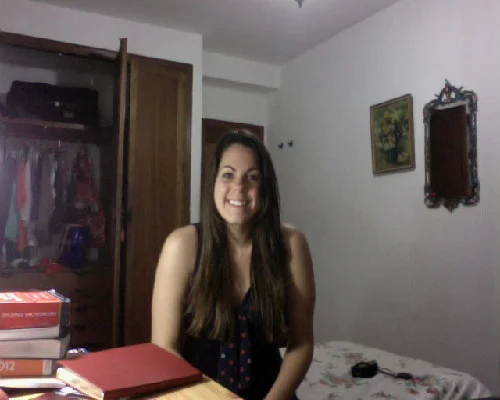
5 things I've already learned about Spain
- People greet by kissing on the cheek - First on the left, then on the right.
- Meal times really are what guidebooks say they are. The main meal is around 2-3 at my house and dinner is around 9-10. There is a tapas restaurant in a plaza outside my window and it is extremely busy now at 10:30.
- It is cool in the morning and at night but hot during the day
- Taxi drivers don’t always know where they are going, but if you talk to them you can learn about what you are seeing as opposed to just driving by things.
- I have a lot more to learn! (cheesy but true, and I couldn’t have only had 4 things now could I?)

Euro crisis? What Euro crisis?
The Euro-Dollar exchange rate keeps going down. A week ago it was near 1.4 and today it is 1.26. Looking good for shopping while in Spain!